
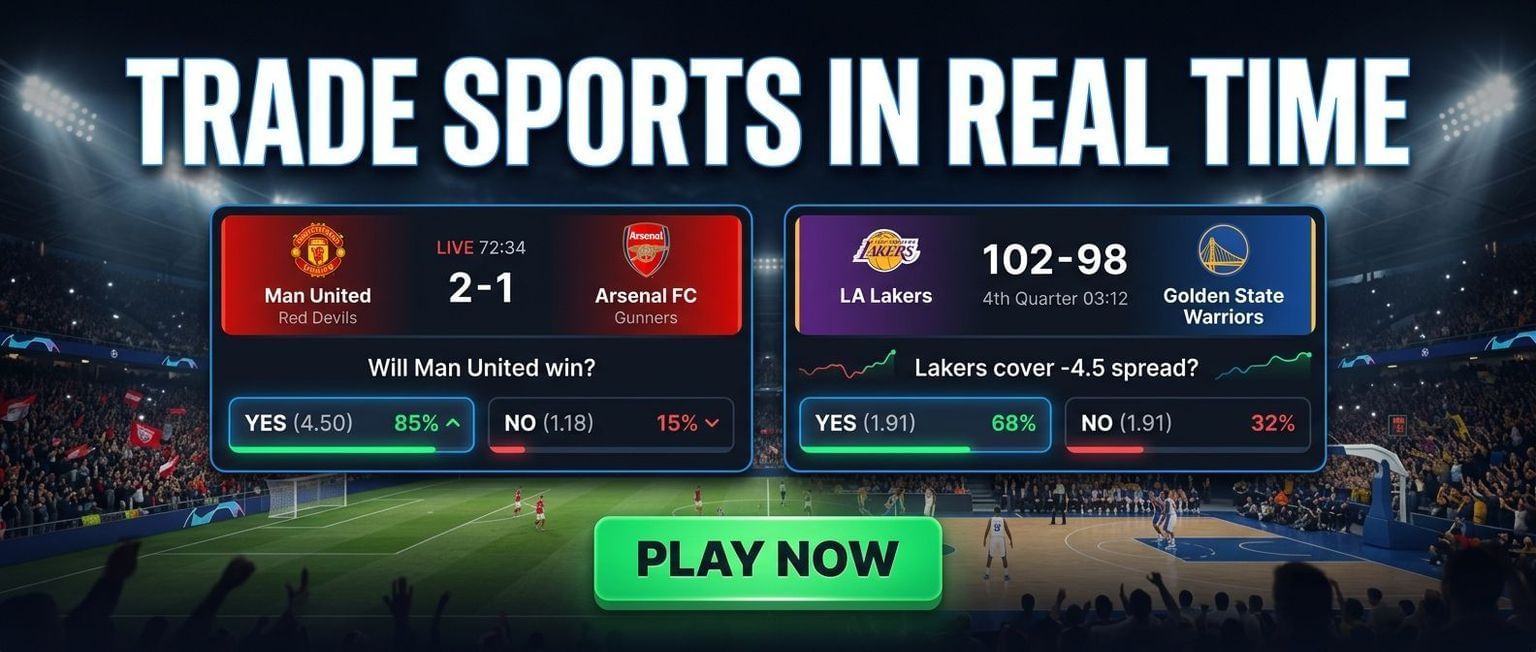
- Open the market and read the rulesConfirm the exact condition for Yes and the deadline. Many mistakes happen because people trade the headline instead of the actual resolution criteria.
- Choose the outcome you want (Yes or No)Pick the side that matches your belief. If you think the event will not happen, buying No shares is often simpler than trying to "short" Yes.
- Decide your order style: immediate price vs chosen priceIf you accept the current available price, you’ll likely fill quickly but you may pay a bit more due to spread or slippage. If you set a specific price you’re willing to pay, you may wait for a fill.
- Enter size thoughtfullyThink in terms of risk. A common beginner error is sizing based on how confident they feel rather than how much they can afford to have tied up until resolution.
- Review the trade previewCheck the estimated average price, total cost, and anything indicating price impact. If your order is large relative to liquidity, the average price can drift.
- Place the order and confirm it filledAfter submitting, verify whether it filled fully or partially. Partial fills are normal in thinner markets.
How to Buy and Sell Shares on Polymarket
On Polymarket, you’re not buying stock in a company. You’re buying shares in an outcome of a specific question, like “Will X happen by Y date?” Each market typically has outcomes such as Yes and No. A share pays out based on what ends up being true when the market resolves.
This matters because the price of a share functions like a real-time signal of how likely traders think an outcome is, while also letting you express your own view. If you think the market is underestimating an outcome, you can buy shares. If you think it’s overestimating it, you can buy the opposite outcome or sell what you already hold.
Key concepts you need before you place a trade
A few terms show up repeatedly when you trade on Polymarket:
A “share” is a position that can be worth something at settlement depending on the resolved outcome.
“Yes” and “No” are the two most common outcomes. Holding Yes shares is a bet that the event happens; holding No shares is the opposite.
The “price” is what you pay per share right now. In many prediction-market designs, prices are commonly interpreted as an implied probability, but you should treat that as a rule of thumb, not a guarantee of accuracy.
“Liquidity” describes how easy it is to trade without moving the price much. In a highly liquid market, you can usually buy or sell with less slippage.
The “spread” is the gap between the best available buy price and sell price. Wider spreads can make entering and exiting positions more expensive.
“Resolution” is the moment the market is finalized based on its rules. “Settlement” is when positions pay out accordingly.
Most confusion comes from mixing up “price movement” with “winning.” You can profit before resolution if the price moves in your favor and you sell, but you can also lose money if you exit at a worse price-even if your original prediction ends up correct later.
How Polymarket prices and order matching generally work
Polymarket markets are designed so traders can take either side of a question by buying outcome shares. Under the hood, trades are matched through an order-book style experience and/or automated liquidity mechanisms, depending on the market’s implementation at the time.
In practice, you’ll typically see:
- A current trading price for Yes and No
- The ability to place an order to buy or sell
- A view of recent price movement and market activity
Even if you’re new, the key idea is simple: you’re either accepting the best available price now (market-style behavior) or you’re posting a price you’re willing to trade at (limit-style behavior). The second approach can help control entry/exit price, but it may not fill immediately-or at all.
Because platform mechanics can evolve, always read the market’s own trading panel and the market rules before assuming exactly how orders fill.
Prep work: account, wallet, and funds without headaches
Before you can buy or sell, you’ll need an account and a funded balance in the currency Polymarket supports for trading. Polymarket has historically used crypto rails (often stablecoin-based), so be ready for basic wallet and network considerations.
Two practical points save a lot of pain:
First, make sure you’re using the correct network when depositing or withdrawing. Sending funds on the wrong chain can result in loss or delays.
Second, keep a little extra balance for transaction costs that may apply on the network or app flow, especially if you plan to trade frequently.
If you’re brand new to prediction markets, it can also help to read a broader explainer once: Prediction markets guide.
The no-nonsense way to choose a market you can actually trade well
Not all markets are equally tradeable. Before buying anything, check:
Trading activity: A market with little volume can be hard to exit.
Spread: If the gap between buy and sell is large, you’re starting at a disadvantage.
Time to resolution: Longer-dated markets can tie up funds for a while, and narratives can change many times.
Clarity of rules: A well-written market leaves little ambiguity about what counts as Yes vs No.
A good habit is to read the market’s resolution source and criteria first, then decide if you’re comfortable with how it will be judged.
Buy shares on Polymarket in clear, repeatable steps
Buying shares is straightforward once you treat it like placing an order for an outcome.
Sell shares: the two main ways traders exit
“Selling” can mean two different actions:
Selling shares you already hold (closing or reducing your position). This is the standard exit. You’re swapping your shares back for cash at current market prices. Your profit or loss depends on your entry price versus your exit price.
Selling by taking the opposite side (effectively neutralizing exposure). If you hold Yes shares, buying No shares changes your net exposure. Some platforms and market structures make this feel similar to “closing,” but economically you’re adding an offsetting position. Whether that’s identical to a direct sale depends on the market mechanics and how the UI executes the trade, so check your position summary after the transaction.
In most cases, if the interface offers a clear “Sell” option for your existing shares, that’s the cleanest way to exit and avoid unintended leftover exposure.
A practical example: reading price moves without overcomplicating it
Imagine a market: “Will Candidate A win the election?” You buy Yes shares when the price is 0.40 because you believe the market is underpricing the chances.
Two different outcomes for your trade can happen:
If new polling or news pushes the Yes price to 0.55, you could sell then and potentially realize a gain-even though the election hasn’t happened yet.
If later news pushes the price down to 0.30, selling would likely lock in a loss. You can hold until resolution, but you’re accepting the risk that the final result may still be No, in which case Yes shares would settle accordingly.
The takeaway: trading profits come from buying at one price and selling at another, while settlement value comes from the final resolved outcome. Those are related, but not the same.
Resolution and settlement: what actually happens at the end
Every Polymarket market has a set of rules describing:
- What event determines the outcome
- Which sources or authorities are used
- When the decision is made (or how delays are handled)
At resolution, the market finalizes as Yes or No (or another defined outcome structure, if applicable). Settlement then credits the appropriate value to the winning outcome shares. If you’re holding the losing outcome at settlement, it settles accordingly.
If a market is ambiguous, disputed, or delayed, resolution can take longer than expected. That’s why reading the rules up front is more than a formality-it’s risk control.
Critical mechanics and limitations that can affect your results
Even when you’re “right” about an event, these factors can shape your experience:
Slippage: Large orders in low-liquidity markets can fill at worse prices than expected.
Spread costs: Entering and exiting immediately can create a loss purely from the bid-ask gap.
Timing risk: Prices can swing hard around breaking news, and what looks “obvious” in hindsight can be tradable only at very expensive prices in real time.
Funding lockup: If you plan to hold to resolution, your capital can be tied up for weeks or months.
Rule risk: If you misunderstand the resolution criteria, you may be trading a different question than you think you are.
Common mistakes that cost new traders money
The most frequent errors are surprisingly basic:
Trading the headline instead of the rules. A single clause like “as reported by Source X” can change everything.
Ignoring liquidity. If you can’t exit without moving the price, you don’t really have flexibility.
Confusing probability with certainty. A 0.80 price is not a promise; it’s a tradable market view that can change quickly.
Oversizing a position. Confidence is not a hedge. If being wrong would force a panic sell, the size is too big.
Chasing moves. Buying right after a major price jump often means paying a premium when uncertainty is highest.
Polymarket-specific features to pay attention to while trading
When you’re trading on Polymarket, focus on what the platform shows you for that specific market:
Market rules and resolution source: Treat this as the contract.
Your positions panel: Confirm how many shares you hold, average entry price, and current value.
Order status: Check whether orders are open, partially filled, or filled.
If you want to understand how market categories and question types vary across the platform, see: Polymarket markets.
FAQ: quick answers to common trading questions
Yes. You can usually exit by selling your shares back into the market at the current available prices, assuming there’s enough liquidity to fill your order.
Buying No is a direct way to express the view that the event will not happen. “Shorting” is a separate concept in traditional finance; on prediction markets, taking the opposite outcome often accomplishes the same practical goal, but the exact mechanics depend on the platform’s trade flow.
In markets with limited liquidity, your order can experience slippage, meaning parts of it fill at multiple price levels. Spread can also make the effective execution price look worse than the displayed mid-price.
Markets follow their written resolution rules and sources. If clarification is needed, resolution can be delayed until the criteria can be applied.
No. Your profit or loss is determined by the difference between your buy and sell prices if you exit early. Holding to settlement means your outcome is determined by the final resolution instead.
A limit order can control your entry price, but it may not fill. Buying at the current price is faster, but you may pay more due to spread and slippage.