
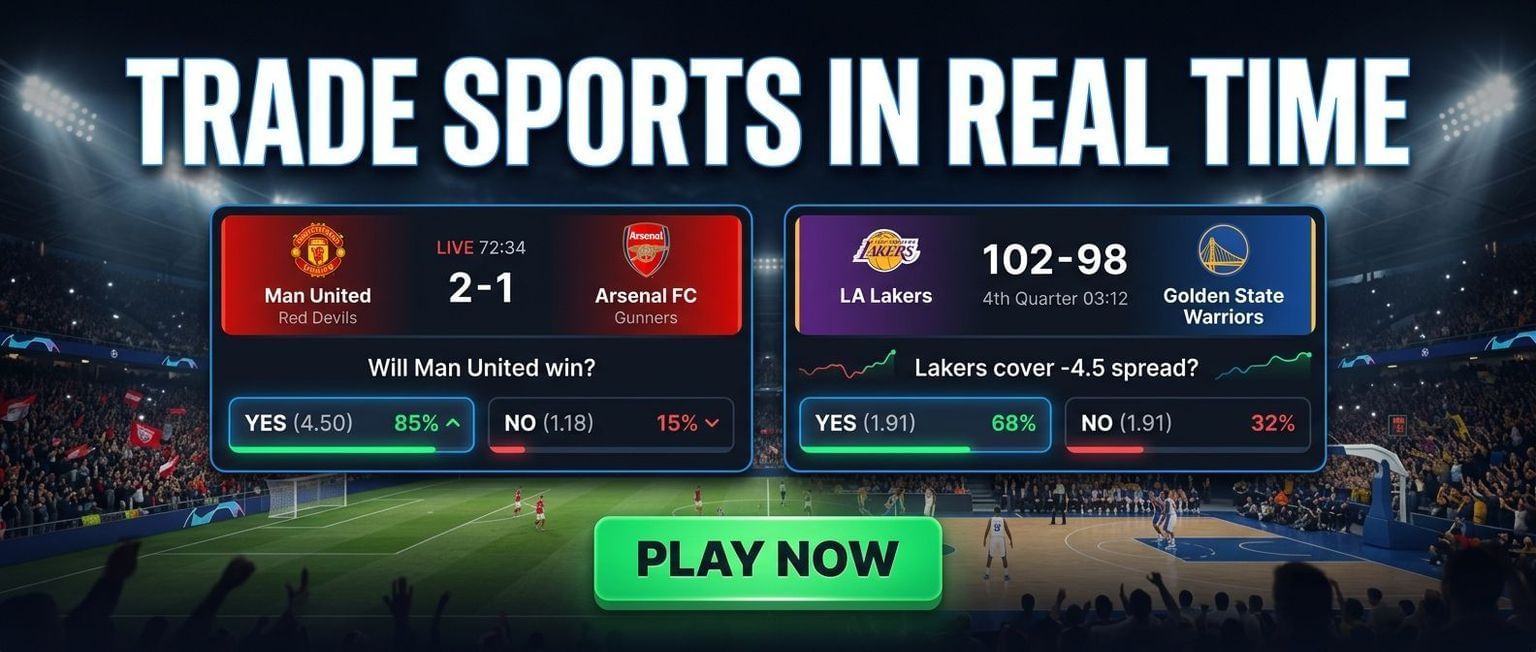
How Polymarket Prediction Markets Work
Prediction markets are trading venues where people buy and sell shares tied to a real-world outcome - like “Will X happen by date Y?” The market price moves up and down based on what traders collectively believe, and that price is often read as a rough, constantly updating probability.
Polymarket is one of the best-known prediction market platforms. It packages these ideas into simple “Yes” and “No” markets you can trade any time before an event resolves. Understanding how Polymarket works helps you read prices correctly, place smarter trades, and avoid common misunderstandings about what the numbers actually mean.
Why Polymarket prediction markets matter in plain English
A prediction market turns opinions into a measurable signal. Instead of asking people what they think, it asks what they’re willing to trade on - and then summarizes that activity in a single price.
That matters because it can:
- Aggregate lots of information quickly (news, expertise, data, and differing viewpoints).
- Update in real time as new information arrives.
- Reveal disagreement clearly (through price swings and liquidity).
At the same time, it’s not magic. Prices can be wrong, especially when few traders participate, when information is unclear, or when a market is easy to push around with large trades.
The core idea: “Yes/No shares” and what a price really means
Most Polymarket markets are framed as a question with two outcomes: Yes or No. You trade shares of these outcomes.
Think of a “Yes” share like this:
- If the final answer is Yes, that share settles at 1 (often displayed as $1.00).
- If the final answer is No, that share settles at 0.
A “No” share is the mirror image - it settles at 1 if the outcome is No, otherwise 0.
The live trading price is what people are paying right now for that share. If “Yes” is trading around 0.62, many readers interpret that as roughly a 62% implied probability. That’s a useful shortcut, but it’s still a market price - influenced by supply and demand, fees, and how easy it is to trade at that moment.
How a Polymarket market is built: the pieces that make it work
Every market has a few components you should check before trading:
- The question and resolution criteria: The exact wording matters. Polymarket markets typically specify a source (or sources) used to determine the official outcome and a deadline or time window.
- The possible outcomes: Often just Yes/No, but sometimes there can be multiple choices depending on how a market is structured.
- The end time: Trading usually continues until a specified cutoff. After that, the market stops trading and waits for resolution.
- Liquidity: Liquidity describes how easily you can buy or sell without moving the price too much. Low liquidity can mean worse execution and bigger price jumps.
The pricing engine: why prices move when you trade
Polymarket markets are designed so that traders can transact continuously. In many modern prediction markets, prices are determined either by an order book (buyers and sellers posting bids and asks) or by an automated market maker (AMM) that offers quotes based on current supply.
The key practical takeaway is the same either way:
- Small trades in a liquid market might barely move the price.
- The same trade size in an illiquid market can move price a lot.
- Your trade itself can change the “probability” you’re looking at, because price is the output of trading.
So if you see a sudden jump from 0.40 to 0.55, it may reflect new information - or it may simply mean a big trade hit a thin market.
Step-by-step: how trading works on Polymarket
Here’s the typical flow from idea to trade to exit:
- First, you pick a market and read the fine print. Don’t skim. Resolution details (source, timing, definitions) are where most mistakes happen.
- Next, you choose which side you want exposure to - Yes or No. You’re not “placing a bet” in the traditional sense; you’re buying a position that you can potentially sell later.
- Then, you decide order type and size. If the interface offers market and limit orders, a market order prioritizes speed while a limit order prioritizes price. In thin markets, limit orders can help avoid unpleasant fills.
- After that, you enter the trade and receive shares (a position). Your profit or loss changes as the market price moves.
- Finally, you manage the position. You can hold until settlement, or you can sell earlier to lock in gains or cut losses. Many traders treat it more like trading than like traditional wagering.
A practical example that makes the mechanics click
Imagine a market: “Will Candidate A win the election?” There are Yes and No shares.
You buy Yes at 0.30 because you think the market is underrating the chance. Two weeks later, new polling information comes out and Yes trades at 0.45.
At this point you have options:
- Sell now around 0.45 to realize a gain.
- Keep holding if you still think the true chance is higher than the price.
- Reduce risk by selling part of your position.
If the election result is Yes and you held to settlement, the Yes shares settle at 1. If the result is No, they settle at 0. The same logic applies to No shares.
Settlement and resolution: where the “real-world” meets the market
Settlement is when the market finalizes and positions become redeemable based on the outcome.
To understand settlement, focus on:
- Resolution source: Many markets specify a particular official source (for example, an election authority, a recognized data provider, or a defined public announcement). If a source is ambiguous or could be delayed, that can affect how long your funds are tied up.
- Edge cases: Good markets define what happens if an event is postponed, canceled, or partially completed. If the rules don’t clearly handle edge cases, you’re taking extra risk.
- Disputes and changes: Platforms may have processes for handling disputes, corrections, or unusual outcomes. Because procedures can evolve, treat the market’s written resolution criteria as the primary reference, not assumptions based on past markets.
Key terms you’ll see on Polymarket - explained simply
- Implied probability: The market price interpreted as a probability. It’s a convenient reading, not a guarantee.
- Liquidity: How easily you can trade without pushing the price around.
- Spread: The gap between the best available buy price and sell price. Wider spreads typically mean higher trading friction.
- Slippage: The difference between the expected price and the executed price, common when the market is thin or your order is large.
- Market cap / volume (where shown): Indicators of activity, but they don’t automatically mean a market is “accurate.” They mainly tell you how active trading has been.
What makes Polymarket “Polymarket” (not just any prediction market)
Polymarket is known for packaging outcomes into straightforward Yes/No markets with always-on trading, so you can enter and exit before the event resolves. The platform experience tends to emphasize readability - a single price per outcome, a chart, and a clear resolution description.
The most Polymarket-specific habit to build is this: treat the market rules section as part of the product. Two markets can look identical on the surface but behave very differently if their resolution sources, deadlines, or definitions differ.
Important mechanics and limitations to keep in mind
- Prices are not “ true odds .” They reflect what traders are doing now. That can be heavily influenced by sentiment, headlines, and positioning, not just careful forecasting.
- Low liquidity can distort signals. A market with little activity can be moved by a relatively small amount of capital, making the implied probability less reliable.
- Timing matters. Many questions include a “by” date and a specific time zone or cutoff. If you assume the wrong timing, you can end up holding the wrong exposure.
- Resolution can take time. Even after trading ends, the platform may need time to confirm the outcome per the listed criteria, especially for complex or disputed events.
Common mistakes smart people still make
- Reading headlines and skipping definitions. For example, a question might refer to an official certification date rather than a media projection. Those aren’t the same.
- Assuming “Yes price + No price = 1” in all conditions. In practice, pricing can deviate due to spreads, fees, liquidity conditions, or how orders are matched.
- Treating a price move as proof of new information. Sometimes it’s just a large order or thin liquidity.
- Over-sizing positions in niche markets. The less liquid the market, the harder it can be to exit without moving the price against yourself.
- Ignoring the exit plan. Many users focus on being “right” at settlement, but risk often comes from what happens in between - volatility, lockup time, and the ability to close.
How different market categories typically work on Polymarket
Polymarket markets often cluster into recognizable categories. The mechanics are the same, but what “resolution” means varies.
- Politics: Outcomes like election results, legislative actions, confirmations, or official decisions. These markets often hinge on official reporting sources and defined deadlines.
- Finance and macro: Questions tied to economic releases, central bank decisions, or index levels. Definitions matter a lot - which data release, which revision, what timestamp.
- Crypto: Topics like protocol upgrades, ETF decisions, exchange events, or on-chain metrics. These can require very precise definitions and sources, especially for metrics.
- Sports: Usually match or tournament outcomes. Here, postponements, overtime rules, and official scoring sources are key.
- Tech and internet culture: Product launches, company actions, policy announcements, or platform changes. Ambiguity risk can be higher unless the resolution criteria are very specific.
FAQ
It’s an implied probability based on trading. It can be informative, but it can also be noisy or skewed by low liquidity, sentiment, or temporary imbalances.
Typically, yes - that’s a major feature of prediction markets. You’re trading shares, so you can often exit early by selling, depending on liquidity.
It depends on the market’s resolution rules. Always check what the market says about postponements, cancellations, and alternative outcomes.
That usually happens in low-liquidity markets or when your order is large relative to available quotes. Slippage and spreads tend to be bigger in those conditions.
The market question, the resolution criteria (including source), the deadline/cutoff time, and the current liquidity/spread so you understand execution risk.