
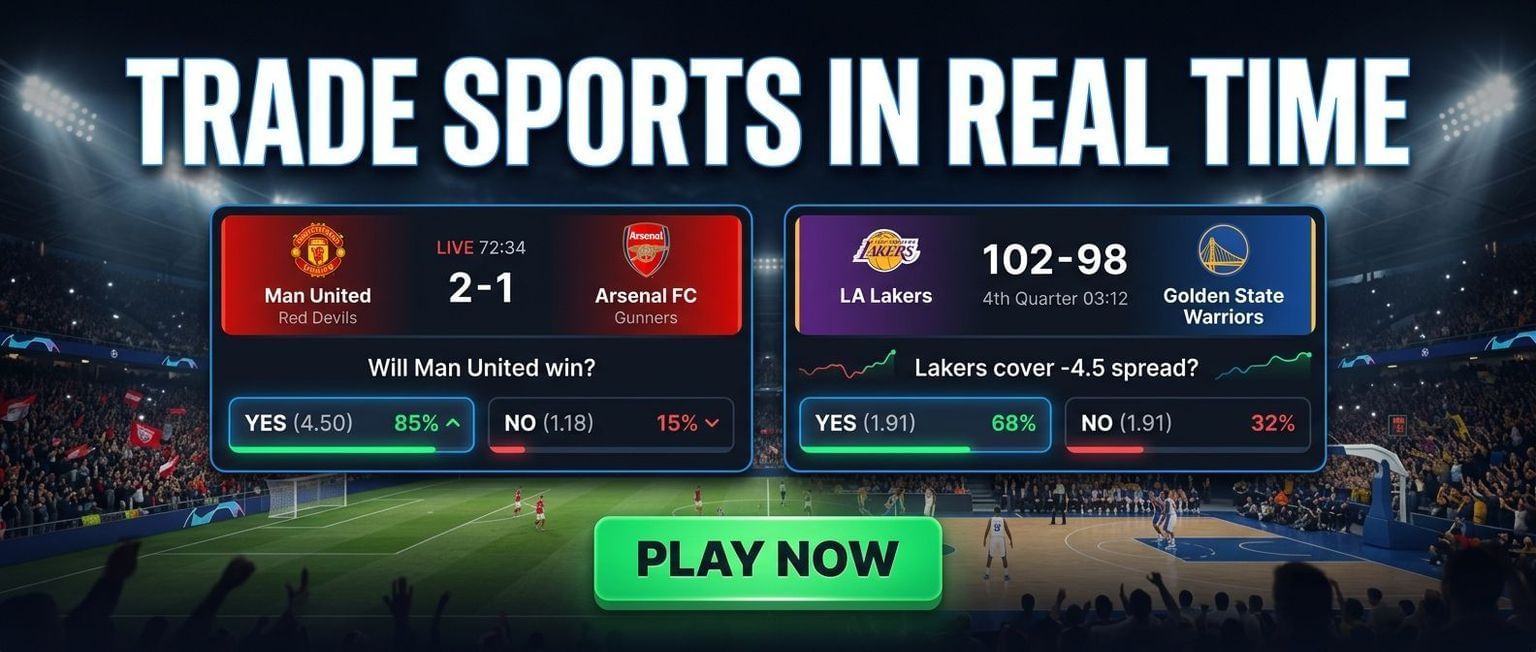
- You buy shares of an outcomeYou choose an outcome and buy shares at the current market price. That price reflects the market’s collective view at that time. You can often buy or sell at any time while the market is open, depending on liquidity.
- Your position value moves while the market is liveAs new information arrives, traders reprice the outcomes. Your position may show unrealized profit or loss. At this stage, nothing has “paid out” - you simply own shares that you can hold or trade.
- The event happens, then the market resolves based on its rulesEach market has resolution criteria and a source. Resolution is not just what people think happened. It’s what the market rules say happened, verified via the referenced sources and process. This is a common stumbling point: two people can agree on the real-world situation but disagree on whether the market, as written, should resolve YES or NO. Payouts follow the written resolution rules.
- Winning shares become redeemable; losing shares become worthlessAfter the market is officially resolved: Winning outcome shares settle to full settled value. Losing outcome shares settle to zero. If you hold both outcomes for the same market, each side settles according to the final resolution.
- You redeem (claim) the settled valueOnce resolved, you typically need to redeem to realize the value from winning shares. The user interface may show a redeemable balance or a “redeem” action. If you don’t redeem immediately, your entitlement generally doesn’t vanish just because time passed, but timing and interface details can change, so it’s smart to check the platform’s current redemption flow.
How Polymarket Payouts Work
A “payout” on Polymarket is what happens when a prediction market ends and the winning outcome is determined. If you hold shares of the outcome that resolves as true, those shares become redeemable for their full settled value. If you hold shares of the losing outcome, they settle to zero.
This matters because the entire point of trading in a prediction market is that prices move before resolution, but payouts only happen at resolution. Understanding how settlement works helps you avoid confusion about “profits” that appear on screen while a market is still open, and it helps you plan for timing, liquidity, and the possibility of disputes.
Polymarket markets are generally structured around clear, yes/no questions (or multiple outcomes) with a resolution source defined up front. Your eventual payout depends on (1) which outcome you hold at the end and (2) how the market resolves.
The simple model: shares, outcomes, and settlement value
Most Polymarket markets can be understood with a straightforward mental model:
When you buy an outcome (like YES or NO), you’re buying shares of that outcome. Each share has a maximum settled value if it wins and a minimum settled value if it loses.
- If your outcome wins at resolution, your shares settle to the winning value (often described as “full value”).
- If your outcome loses, your shares settle to zero.
Before resolution, share prices move based on trader beliefs and supply/demand. That movement can make your position look profitable or unprofitable temporarily, but it is not a payout. A payout is only determined after the market resolves.
If you’re still getting oriented to how positions work, it can help to first read a general overview of how Polymarket works and then come back to payouts.
The key terms you’ll see during payout time
Polymarket payout mechanics are easiest to follow once these terms are clear:
- Resolution: The moment the market outcome is officially determined based on the rules and the listed source(s).
- Resolved: The market has been finalized to a specific outcome. Once resolved, the winning shares become redeemable.
- Settlement: The conversion of outcome shares into their final value after resolution. People often use “settlement” and “payout” interchangeably.
- Redeem: The action of claiming the value of your winning shares after the market resolves.
- Position: What you currently hold - which outcome shares and how many.
- Mark-to-market (unrealized P/L): The “paper” profit or loss based on the current trading price before resolution. This is not your payout.
- Liquidity: How easy it is to buy or sell shares without moving the price much. Liquidity affects whether you can exit before resolution, but it does not change how final payouts work.
How Polymarket payouts work, step by step
Practical payout examples that make it click
Example 1 - Holding to resolution
A market asks: “Will X happen by Date Y?” with outcomes YES and NO. You buy YES shares and hold them until the market resolves:
- If the market resolves YES, your YES shares settle to full value and can be redeemed.
- If it resolves NO, your YES shares settle to zero.
Example 2 - Selling early vs waiting for payout
You buy YES shares, the price rises, and you sell before the event resolves. In that case, your result is realized through the trade itself, not through the final payout. You no longer hold shares at resolution, so you won’t receive a payout from settlement.
Example 3 - The market resolves, but it’s not what you expected
You hold YES because “basically YES happened.” But the market question includes a specific measurement, deadline, or named source that ultimately reports a different outcome. The market can resolve NO even if your intuition says YES. In that case, your payout follows the official resolution, not personal interpretation.
What actually determines the payout: resolution rules beat headlines
Polymarket markets live and die by their resolution language. The market page typically describes:
- The exact question being answered
- The deadline or time window
- The resolution source(s)
- Any special conditions or edge cases
If you’re trading a market where wording is subtle - for example, questions involving official announcements, specific jurisdictions, revised counts, or post-deadline updates - the payout can hinge on details that casual readers miss.
A good habit is to read the resolution criteria as if you were trying to prove yourself wrong. If you can see a plausible path where the market resolves against your interpretation, size your position accordingly.
Timing realities: when you get paid vs when you “win”
In prediction markets, being correct and getting paid are related but not identical in timing.
You can be “right” in the real world and still wait for:
- The defined source to publish the relevant information
- The platform to finalize the resolution
- Any dispute process (if applicable) to complete
This waiting period can matter if you need funds at a particular time. If you might need liquidity earlier, consider whether you’d rather exit by selling your position before resolution, understanding that selling early means your result depends on the market price you can get at that time.
Fees, spreads, and why your payout can differ from your expectations
Even if the settlement value is straightforward, your net result depends on what you paid to enter and what you received to exit (if you traded out early), plus any fees the platform applies at the time you trade or redeem.
Two common sources of confusion:
- Spread and slippage: The price you actually get can differ from the price you saw a moment ago, especially in low-liquidity markets.
- Mixing realized and unrealized P/L: Your screen might show gains before resolution, but your final outcome depends on whether you sell or hold to settlement.
Because fee structures and mechanics can change, avoid assuming any specific fee percentage is permanent. If you’re comparing options, verify the current trading and redemption fees directly in the platform interface or documentation at the time you trade.
Multi-outcome markets: payouts when there’s more than YES/NO
Some prediction markets have more than two outcomes (for example, “Which of these will happen?”). The payout logic stays consistent:
- Only the outcome that resolves as correct settles to full value.
- All other outcomes settle to zero.
In these markets, traders sometimes buy multiple outcomes to shape risk, but the final payout still depends entirely on which single outcome is selected at resolution.
The biggest payout misunderstandings (and how to avoid them)
Many payout problems aren’t technical - they’re expectation problems. The most common ones:
- Misunderstanding 1 - “The price hit 90%, so I’m guaranteed a payout”: High prices signal market confidence, not certainty. Only resolution produces a payout.
- Misunderstanding 2 - “The news says it happened, so the market must resolve my way”: Resolution follows the market’s specified source and wording, which can lag headlines or define the event more narrowly.
- Misunderstanding 3 - “If I’m up now, I’ll still be up at payout”: Unrealized gains can disappear if the price reverses before resolution. Your final outcome depends on whether you sell before settlement or hold to resolution.
- Misunderstanding 4 - “I bought the ‘right’ side too late, so payout changes”: Buying later doesn’t change settlement value. It changes your cost basis (what you paid), which changes your net profit or loss.
- Misunderstanding 5 - “I’ll automatically get paid without doing anything”: Some platforms require an explicit redeem action. Know the current flow so you’re not surprised after resolution.
Smart checks to make before you rely on a payout
Before committing to a position you plan to hold to resolution, quickly verify:
- The exact deadline and any timezone implications
- The resolution source and what it actually publishes
- Whether the wording includes edge cases (recounts, postponements, cancellations, replacements, revised data)
- Whether you’re comfortable waiting for final resolution if it takes time
If you want to learn how pricing relates to implied probability and why the market price is not the same thing as “odds,” see prediction market odds explained for a clear breakdown.
FAQ
No. If you sell, your result is realized through the trade. You only receive a settlement payout for shares you still hold when the market resolves.
Yes. Markets resolve according to their written rules and named sources, which can differ from public perception or early reporting.
It depends on when the resolution source publishes the needed information and when the market is finalized. Some resolve quickly, others take longer if verification is delayed or disputed.
They settle to zero at resolution, meaning they are not redeemable for value after the market resolves.
Typically, no. Only the single outcome chosen at resolution settles to full value; all other outcomes settle to zero.